Viviparous or oviparous?
Viviparous: the young develop inside their mother's body and are born alive. Oviparous: the female lays eggs, which hatch outside her body. The rule sounds simple, but the animal kingdom loves to blur the lines. Some species even surprise nature lovers, because the way an animal looks tells you nothing about the way it comes into the world. Trust biology rather than common assumptions to sort every animal before the timer runs out.
How to play
← →Swipe the card left or right
Or tap the two buttons
On a computer: ←→orQDorAD
10 cards, 20 seconds: the timer starts with your first choice.
Frequently asked questions
What is the difference between viviparous and oviparous animals?
In viviparous animals, the embryo develops inside its mother's body, which nourishes it: the young is born alive. In oviparous animals, the female lays eggs. The embryo develops outside her body, fed by the egg's reserves, until it hatches.
What about ovoviviparous animals?
Some animals keep their eggs inside their body until they hatch: they are called ovoviviparous. To avoid any ambiguity, this quiz only includes species that are clearly viviparous or clearly oviparous.
How are the young fed before they are born?
In oviparous animals, the embryo draws on the egg's reserves, especially the yolk. In viviparous animals, the mother feeds it throughout the pregnancy, most often through a placenta.
Why do some animals lay eggs and others not?
Laying eggs makes it possible to produce many young without carrying them for long; carrying them protects them better but limits their number. Both strategies have appeared several times during evolution, in very different groups of animals.
Photo credits
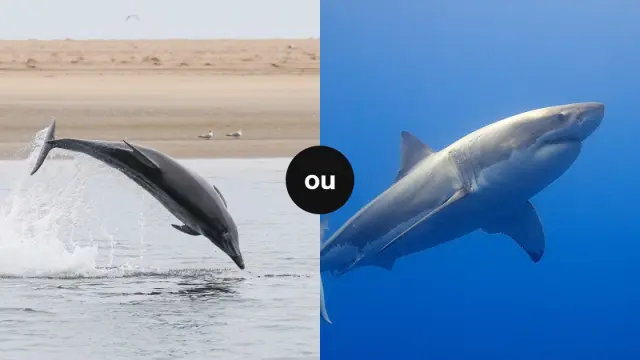
Dolphin : Photo NASA, public domain, Wikimedia Commons ; Bat : Photo Charles J. Sharp, CC BY-SA 4.0, Wikimedia Commons ; Kangaroo : Photo Yu Chu Chin, CC BY 4.0, Wikimedia Commons ; Blue whale : Photo NOAA Photo Library, public domain, Wikimedia Commons ; Pangolin : Photo U.S. Fish and Wildlife Service, CC BY 2.0, Wikimedia Commons ; Armadillo : Photo birdphotos.com, CC BY 3.0, Wikimedia Commons ; Hippopotamus : Photo Bernard Dupont, CC BY-SA 2.0, Wikimedia Commons ; Hammerhead shark : Photo Stevelaycock21, CC BY-SA 4.0, Wikimedia Commons ; Scorpion : Photo Mike Baird, CC BY 2.0, Wikimedia Commons ; Tsetse fly : Photo Alan R Walker, CC BY-SA 3.0, Wikimedia Commons ; Platypus : Photo Charles J. Sharp, CC BY-SA 4.0, Wikimedia Commons ; Echidna : Photo Donald Hobern, CC BY 2.0, Wikimedia Commons ; Kiwi : Photo The.Rohit, CC BY 2.0, Wikimedia Commons ; Emperor penguin : Photo Hannes Grobe/AWI, CC BY 3.0, Wikimedia Commons ; Leatherback turtle : Photo David Rabon, U.S. Fish and Wildlife Service, public domain, Wikimedia Commons ; Nile crocodile : Photo Tim Muttoo, CC BY-SA 2.0, Wikimedia Commons ; Ball python : Photo HCA, CC BY-SA 3.0, Wikimedia Commons ; Atlantic salmon : Photo William W. Hartley, public domain, Wikimedia Commons ; Octopus : Photo H. Zell, CC BY-SA 3.0, Wikimedia Commons ; Small-spotted catshark : Photo Hans Hillewaert, CC BY-SA 4.0, Wikimedia Commons